
There can be many aspects to a successful investment strategy, but one of the things to keep in mind is that it's important to keep an eye on the news related to your assets. For stocks, such news can include earnings reports and corporate actions.
Corporate actions are events initiated by a company that bring material changes to its securities, such as its stock or bonds. These actions directly affect shareholders and can influence the number of shares they own, the value of those shares, or the cash or additional shares they receive.
In simple terms, corporate actions are the ways a company makes financial or structural decisions that impact investors.
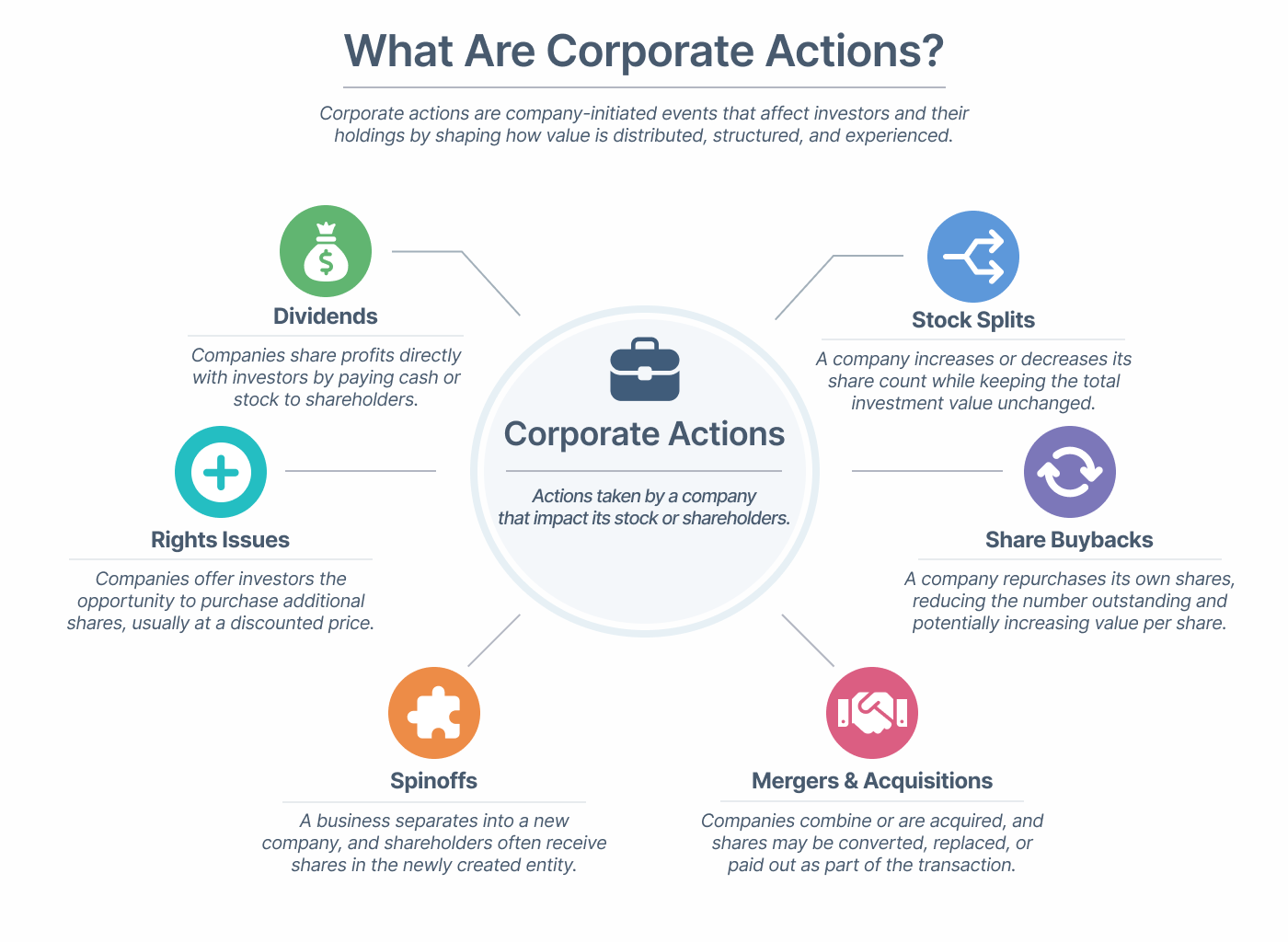
Common Types of Corporate Actions
Dividends
Dividends are payments made by a company to its shareholders, usually in cash and occasionally in additional shares. These payments are typically funded from company profits and distributed on a regular schedule.
Companies issue dividends to return value to shareholders and to signal financial stability and confidence in future earnings. For investors, dividends provide a source of revenue simply for holding the stock, in addition to any potential price appreciation.
Stock Splits and Reverse Stock Splits
A stock split increases the number of shares outstanding while reducing the price per share, such as turning one share into two. A reverse stock split does the opposite by reducing the number of shares and increasing the price per share.
Companies often use stock splits to make shares more affordable and accessible to a broader range of investors, while reverse splits are commonly used to meet exchange listing requirements or improve the appearance of a low share price. For investors, these actions do not change the total value of their investment, but they do change the number of shares held.
Share Buybacks (Repurchases)
Share buybacks occur when a company repurchases its own shares from the open market. By reducing the total number of shares outstanding, buybacks can increase earnings per share and concentrate ownership among remaining shareholders.
Companies typically pursue buybacks when they believe their stock is undervalued or when they want to return excess cash to investors without committing to ongoing dividend payments. For investors, buybacks can support share price growth over time.
Mergers and Acquisitions
Mergers and acquisitions happen when companies combine operations or when one company purchases another. These transactions can significantly reshape a company’s size, strategy, and market position.
Companies pursue mergers and acquisitions to expand into new markets, reduce competition, or achieve operational efficiencies. For investors, these events may result in shares being exchanged, converted into shares of the new entity, or paid out in cash, depending on the terms of the deal.
Spinoffs
A spinoff occurs when a company separates a portion of its business into a new, independent company. Shareholders of the original company often receive shares in the newly created entity.
Companies use spinoffs to allow each business to focus on its core operations and to unlock value that may be hidden within a larger organization. For investors, spinoffs can create opportunities to benefit from the growth of both the original company and the new one.
Rights Issues
A rights issue gives existing shareholders the opportunity to purchase additional shares, usually at a discounted price, before they are offered to the public.
Companies use rights issues to raise capital without taking on additional debt. For investors, participating in a rights issue can help maintain ownership percentage, while choosing not to participate may lead to dilution.
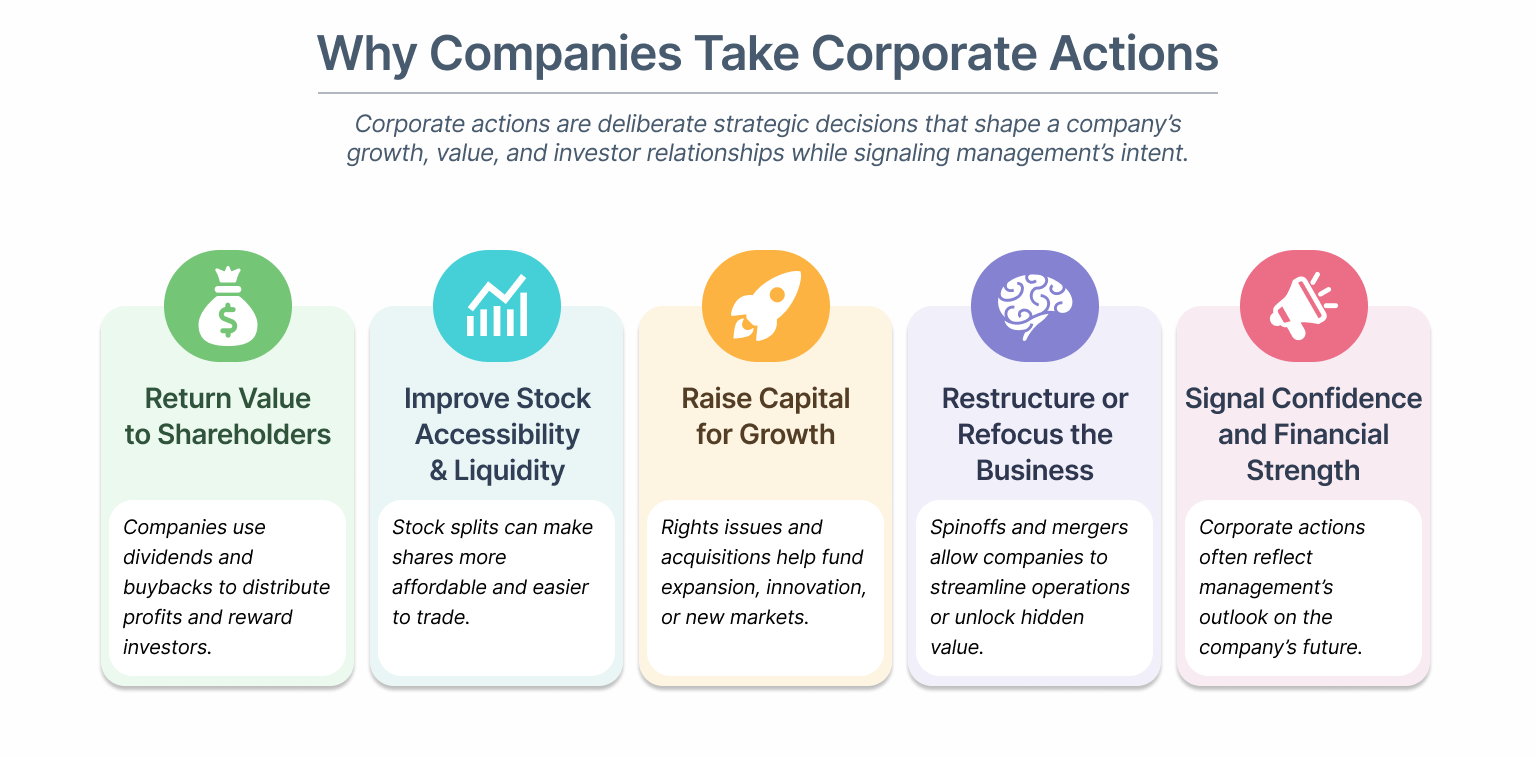
Why Companies Take Corporate Actions
Companies use corporate actions to manage capital, improve stock liquidity, fund growth, restructure operations, and return value to shareholders. These actions are often strategic signals that reflect management’s view of the company’s financial health and future direction.
What Corporate Actions Mean for Investors
For investors, corporate actions can affect portfolio value, revenue generation, tax obligations, and ownership structure. Some actions happen automatically, while others may require investors to make decisions within a specific timeframe, so it’s important to look out for news and shareholder communications from companies. Understanding corporate actions helps investors avoid surprises and better evaluate how a company’s decisions align with their own investment goals.
Thank you for checking out our What are Corporate Actions article! Make sure to follow us on X(Twitter) and let us know your thoughts. Sign up for our newsletter to stay up to date with MEW releases, and check out our weekly podcast Crypto Currents for the latest news in crypto.