Real-World Assets (RWAs) are physical or traditional financial assets—like real estate, stocks, bonds, commodities, invoices, or collectibles—that are represented digitally on a blockchain. Instead of owning the physical item or stock directly, users hold a blockchain-based token that reflects its value, rights, or economic exposure.
The goal of RWA tokenization is to make traditional assets easier to access (both globally and with 24/7 access), cheaper to trade, and compatible with decentralized finance (DeFi).
Why RWAs Are Hot Right Now
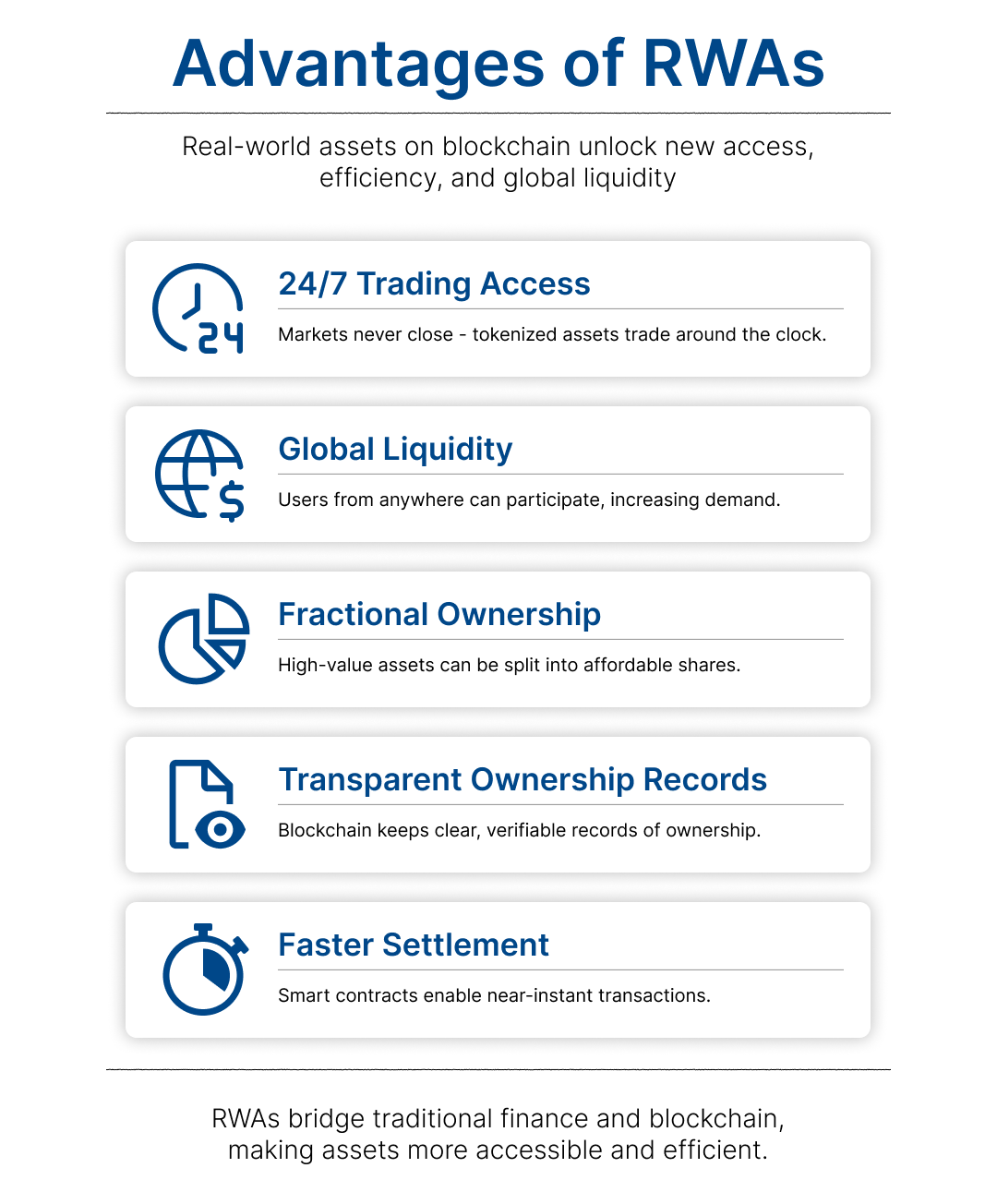
Traditional assets can be slow to settle, expensive to transact, and limited by geography. By putting them onchain, RWAs offer benefits such as 24/7 trading access, global liquidity instead of region-locked markets, fractional ownership that makes high-value assets more accessible, transparent ownership records using blockchain, and faster settlement via smart contracts. This combination makes RWAs one of the fastest-growing categories in crypto, attracting both retail users and major institutions.
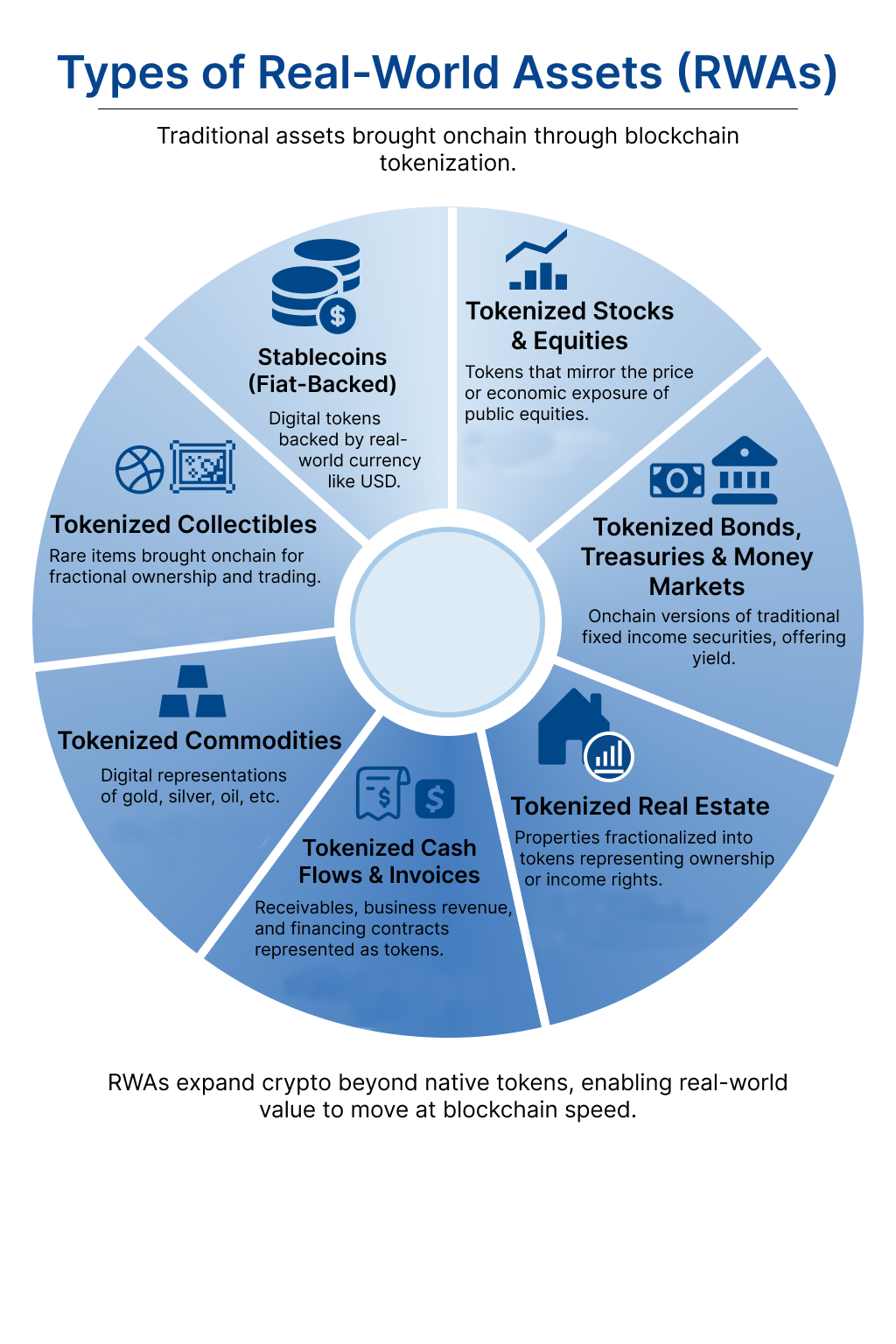
Types of RWAs
1. Stablecoins (Fiat-Backed RWAs)
What they are: Digital tokens backed 1:1 by real-world currency (usually USD).What they represent: A claim on fiat reserves held by custodians.
Popularity: The most widely adopted RWA category, making up ~95%+ of all onchain RWA value. Stablecoins dominate DeFi liquidity, trading pairs, payments, and remittances.
Examples:
- USDC
- USDT
- PYUSD
Why they matter: They act as crypto’s primary settlement currency, enabling global, instant dollar transfers and forming the liquidity backbone of DeFi.
2. Tokenized Stocks & Equities
What they are: Tokens that match the price of real-world equities (Apple, Tesla, Nvidia, etc.).What they represent: Economic exposure—not always direct share ownership—depending on the platform.
Popularity: Growing rapidly, especially outside the U.S., where demand for 24/7 trading and fractional shares is high. Still smaller than stablecoins and fixed-income RWAs.
Examples:
- Backed Finance (bAAPL, bTSLA)
- Ondo Finance (AAPLon, TSLAon)
- xStocks (Kraken)
Why they matter: They allow 24/7 global access to markets traditionally tied to trading hours and geographic restrictions, with smaller minimums and crypto-based settlement.
3. Tokenized Bonds, Treasuries & Money-Market Funds
What they are: Onchain versions of traditional fixed income securities, such as government bonds, corporate bonds, and money-market funds.What they represent: Exposure to structured yield from traditional debt markets.
Popularity: Fastest-growing institutional RWA sector, driven by demand for onchain yield and U.S. Treasury exposure.
Examples:
- Ondo Finance (OUSG)
- Maple Finance
- Backed Finance
- Blackrock (BUIDL)
Why they matter: They allow crypto users to access stable yields backed by institutional assets.
4. Tokenized Real Estate
What they are: Properties fractionalized into blockchain tokens.What they represent: Ownership share, rental revenue rights, or asset exposure.
Popularity: Moderate growth — widely discussed but limited by regulatory complexity and geographic restrictions. Popular among retail users.
Examples:
- RealT – tokenized U.S. rental properties
- Lofty AI – fractional real estate with rental payouts
- Blockimmo – Swiss and European tokenized real estate
Why they matter: Real estate is historically illiquid and expensive; tokenization lowers barriers to entry and enables global participation.
5. Tokenized Commodities
What they are: Onchain versions of gold, silver, oil, or agricultural products.What they represent: A claim on stored physical commodities.
Popularity: Niche but steady, heavily concentrated in gold-backed tokens. Highly popular as a hedge but still small compared to stables and tokenized bonds.
Examples:
- Tether Gold (XAUT)
- PAX Gold (PAXG)
Why they matter: They provide a simple way to access hard-asset exposure without physical storage or custody hassles.
6. Tokenized Collectibles & Alternative Assets
What they are: Rare or valuable items represented digitally, allowing fractional access.What they represent: Economic rights tied to collectibles, art, or luxury goods.
Popularity: Small but innovative niche, attracting alternative asset holders and NFT users. Growth slowed after early NFT hype but remains active.
Examples:
- Masterworks – tokenized fine art
- Courtyard – tokenized Pokémon cards
- 4K – tokenized luxury items
Why they matter: They turn high-end collectibles into more liquid and accessible asset classes.
7. Tokenized Cash Flows & Invoices
What they are: Onchain representations of revenue streams or receivables.What they represent: Short-term lending, invoice financing, or structured yield products.
Popularity: Specialized institutional niche, used in credit markets and DeFi lending but not widespread among retail users.
Examples:
- Centrifuge
- Goldfinch
Why they matter: They connect DeFi liquidity to real-world business operations.
How RWAs Work
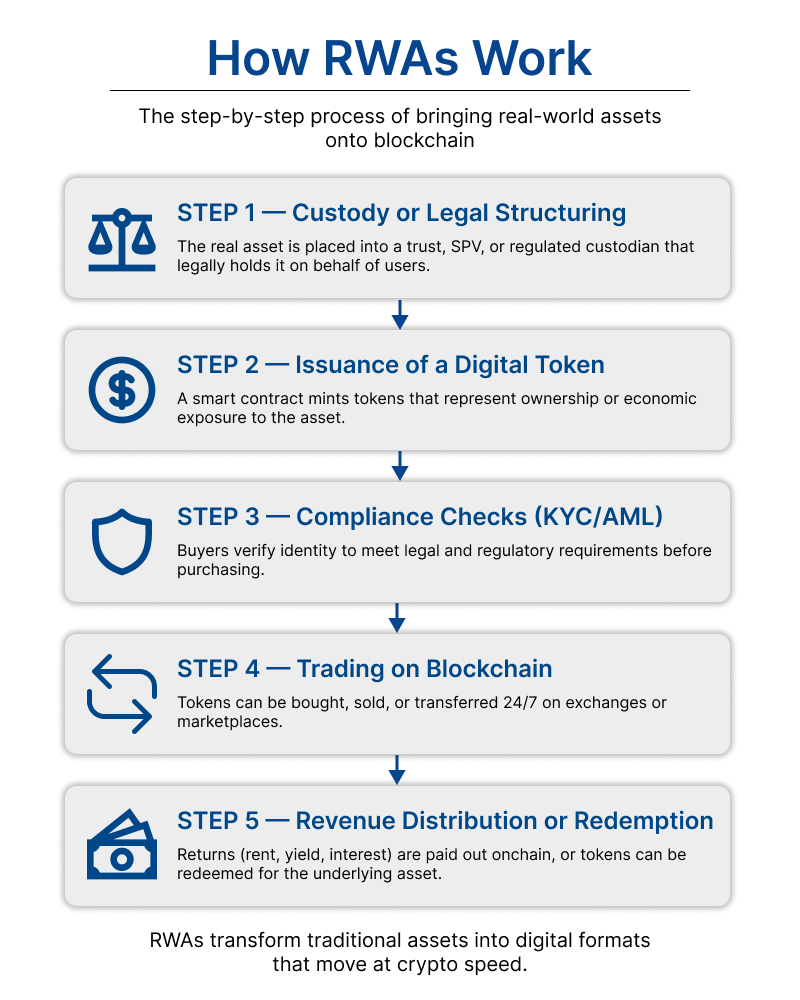
The tokenization process usually involves:
- Custody or legal structuring
- The real asset is placed in a trust, SPV, or custodian. However, some tokenized assets may not be backed by real assets, and that’s something for users to be aware of.
- Issuance of a digital token
- A smart contract mints tokens representing ownership or exposure.
- Compliance checks (KYC/AML)
- Many RWA platforms require identity verification to meet regulations.
- Trading on blockchain
- Users buy, sell, or transfer fractional ownership like any crypto token. Tokenized assets can be permissionless or permissioned, depending on the platform.
- Revenue distribution or redemption
- Yields (like rent or interest) are paid out onchain, or tokens can be redeemed for the underlying asset.
The Future of RWAs
RWA adoption is accelerating because it bridges the gap between crypto and traditional finance. As regulations mature and infrastructure grows, more asset classes—like insurance contracts, carbon credits, or even music royalties—are likely to be tokenized.
The long-term vision is a financial system where almost any asset can move at crypto speed, with global accessibility and automated settlement built directly into the blockchain.
Thank you for checking out our What are RWAs article! Make sure to follow us on X(Twitter) and let us know your thoughts. Sign up for our newsletter to stay up to date with MEW releases, and check out our weekly podcast Crypto Currents for the latest news in crypto.